Jesus said, “Remain in me as I remain in you. Just as a branch cannot bear fruit on its own unless it remains on the vine, so neither can you unless you remain in me. I am the vine, you are the branches. Whoever remains in me and I in him will bear much fruit.” (John 15.4-5)
In the recent movie starring and directed by Robin Wright, Land, released in February of this year, we are faced with the conflicting tension between isolation and connection. The lead, played by Wright, presents a woman named Edee who has lost her husband and young son in a tragic mass shooting. Filled with grief, unable to stay in the land of the living, Edee moves from Chicago to a remote cabin in the Rocky Mountains.
Thinking she can live off the land, a misguided intent, Edee almost loses her own life during the brutal winter months. Faced with starvation and cold, she lay on the floor of her cabin, immobilized and dehydrated, awaiting death. A hunter in the woods, Miguel, finds her and, with the help of a nurse, brings her back from the brink of death.
When Edee recovers enough to communicate with Miguel, she asks him, “Why are you helping me?” The taciturn man responds, “You were in my path.” Slowly, Edee regains her strength and, assisted by Miguel, learns critical survival skills. Bringing supplies to Edee, Miguel is told by her never to bring news of the outside world.
In the last part of the movie, Edee realizes that Miguel has not visited her in too long a while, so she backpacks to the town down the mountain, inquires about him, and learns where he lives. There, she finds Miguel dying of throat cancer, something he had not told her about because she had said she wanted no news from the outside world.
As she sits by his bedside, Edee thanks him for saving her life and he thanks her for redeeming his life, for he too had suffered the loss of his wife and daughter, two broken souls finding a connection in the vast wilderness. Edee takes his hand into her own, the two hands joined, symbolizing the human connection, once lost, that now is restored, bringing meaning, purpose, and redemption to both of them.
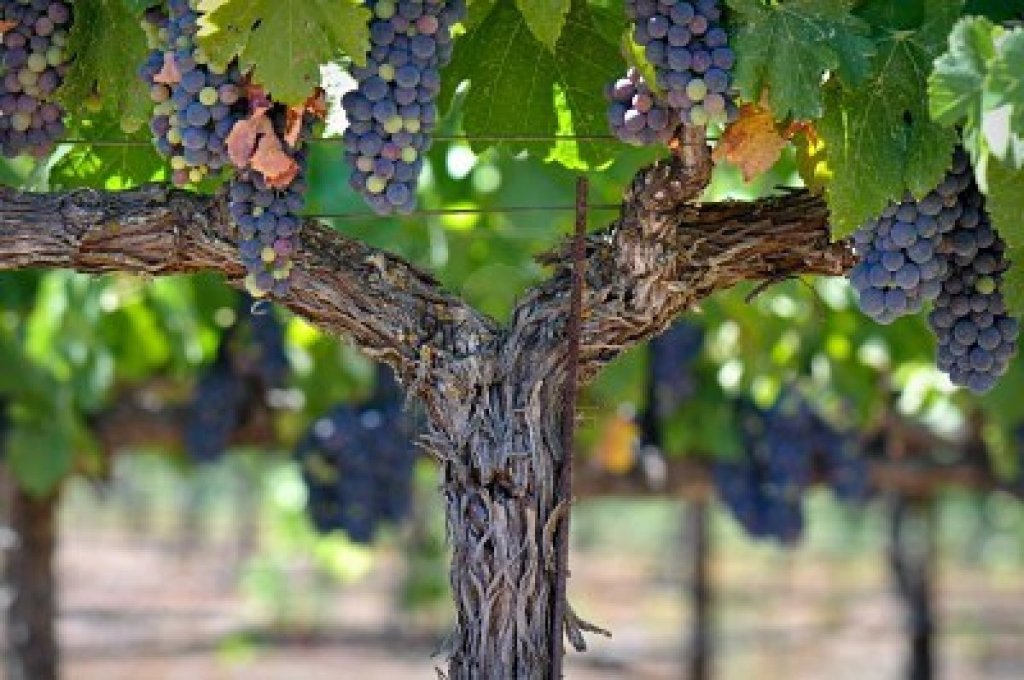
Today, we hear Rabbi Jesus talk to his followers about the connection that he has with his heavenly Father and the connection that he wants them to have with him, a connection that then flows outward to all others on the journey of life. Using the image of a vine and its branches, he sets out four points in his teaching: 1) The Father is the vine grower; 2) He, the Teacher, is the vine; 3) His disciples are branches; and 4) Those who do not abide in him are useless branches.
As we can see, the fourth evangelist, in telling this story, uses the word “abide”, a multivalent word that he uses with regularity, a word that is translated as abide, remain, stay, or make one’s home with, each translation connoting a bond, an intimacy, a connection that exists between two people. “Remain in me, as I remain in you,” Rabbi Jesus tells his disciples, implying a transfusion of life that passes from one to the other, as a branch gets its life from the vine.
This concept of the connection that must exist between the Teacher and his disciples cannot be overstated. If there is any doubt of its importance, a person simply needs to look at a branch that has been broken, split, or separated from the vine, dangling loosely, its life slowly seeping out as the leaves wither and the source of its sustenance is broken.
That image, says the Rabbi, is the situation of the disciple who does not remain with him, the vitality and energy disappearing as the connection between the two is lost, leaving a branch that is good for nothing, as the Teacher says, but to be “thrown into a fire and burned.”
So, as disciples, those who wish to learn from the Teacher, how do we abide or stay connected with him? There are several ways, but none surpasses the simple truth of living as he lived, loving as he loved, and giving as he gave. While the Teacher often spoke in parables or discourses, the greatest lesson he taught came from the way he lived his life, a continuous parable that most clearly showed the lessons he wanted his disciples to learn.
When looking at the life of the Teacher, we find at the heart of his days the central activity of his being there for others, finding them in their lostness, brokenness, and isolation, embracing them, and, in this way, inviting them to return to the human community, where everyone finds a shared humanity, a shared brokenness, and a shared redemption.
Once we understand what the Rabbi is teaching us, we see Miguel gives the exact right answer to Edee when he responds to her question, “Why are you helping me?” with “You were in my path.” His answer shows he understands that the journey of life is best shared with others and, when we find someone in our path who is alone, isolated, or forgotten, then it is our duty as disciples of the Teacher to take the other’s hand into our own, restoring the human connection that has been broken, lost, or destroyed.
We do not need to go in search of the alienated and the disconnected. They are always in our path, waiting for us to see them, to hear them, and to help them. Their hands reach out to ours, hoping against hope that we will take theirs into our own, forming a human bond where, until at moment, there has been only a blind eye, a cold shoulder, or a raised finger.
Our identity as disciples is found, then, in our ability to imitate the Teacher in reaching out to others, connecting with them, and infusing life back into their starved souls. Here, we remember Michelangelo’s beautiful fresco portraying the creation of Adam in which the index finger of God reaches out to the index finger of Adam, life moving from one to the other.
Conjoined in the same way with the Teacher, we inevitably are conjoined to others, since it was his way and his want, always reaching out to others with life-giving love, never leaving behind anyone who has been robbed, beaten, or abandoned on the side of the road to Jericho.
Any effort to distance ourselves from others, any refusal to acknowledge our shared brokenness, anything that would disconnect us from the other is a violation, not only of our discipleship, but of our core humanity. Two hands clasped, the one taking the other, is the essence of being a disciple, the symbol of our abiding with the Teacher, as he has instructed us.
Sadly, we find ourselves living in an age that wantonly ignores the cries of the lost and lonely, pushes away those who are different and desperate, and insults those who beg or bargain for the scraps that fall from our table. We willfully have forgotten what binds us together, choosing instead to capitalize on differences such as color, creed, or culture, failing to see that we all are on the same vine, planted here by the one and same vine grower, in whom we all abide and without whom we all die.
In many ways, it is as if World War I never ended, as we continue to fight one another from behind our trenches that we have dug in the ground, barricading ourselves, shooting shots across the way at the other side, also in their trenches. As such, each passing year finds us no nearer one another, only further from the One who calls us to be one, finding a home in him and in one another.
In their book, Some Kind of Different as Me, the writers Ron Hall and Denver Moore tell about their unlikely friendship, miles apart in every way, Hall an international art dealer, Denver a homeless man. At one point, Denver thanks Ron and his wife Debbie, saying, “You was the onlyest person that looked past my skin and past my meanness and saw that there was somebody worth savin.”
He continues, “We all has more in common than we think. You stood up with courage and faced me when I was dangerous, and it changed my life. You loved me for who I was on the inside, the person God meant for me to be, the one that had just gotten lost for a while on some ugly roads in life.”
As the friendship between the couple and Denver grows and withstands tests and setbacks, he comes to this realization. “I used to to spend a lot of time,” he said, “worryin that I was different from other people, even from other homeless folks. Then, after I met Miss Debbie and Mr. Ron, I worried that I was so different from them that we wadn’t ever gon’ have no kind a’ future.”
“But,” he said, “I found out everybody’s different–the same kind of different as me. We’re all just regular folks walkin down the road God done set in front of us. The truth about it is, whether we is rich or poor or somethin’ in between, this earth ain’t no final restin’ place. So in a way, we is all homeless–just workin our way toward home.”
When the Rabbi called Jesus of Nazareth spoke to his disciples of a vine and its interconnected branches, he was telling them the same thing that Denver came to see. We find who we are only when we find the other, reaching out with our hands, connecting hearts, branches on God’s vine dancing in the wind. Unless we do, we are slowly withering away, cut off from the One who gives us life, disconnected from others who also can bring us back to life.
–Jeremy Myers

 Sunday Brunch