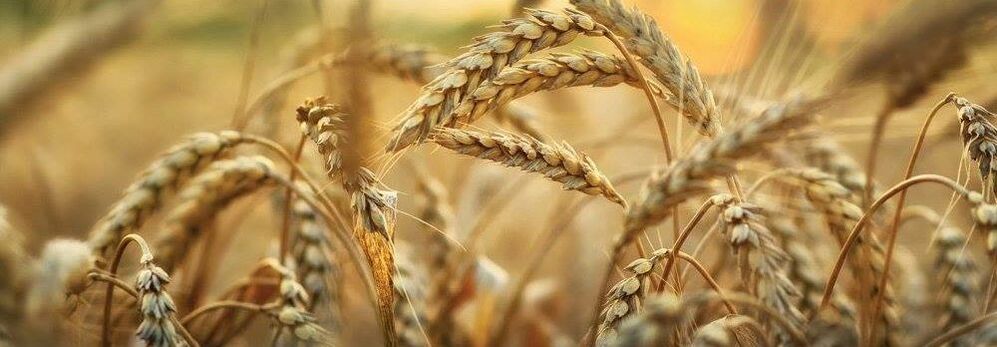
Jesus answered them, “The hour has come for the Son of Man to be glorified. Amen, amen, I say to you, unless a grain of wheat falls to the ground and dies, it remains just a grain of wheat; but if it dies, it produces much fruit.” (John 12.24)
At the conclusion of Kristin Hannah’s recent book, The Four Winds, she writes of the death of the central character, Elsa, a woman disowned years earlier by her parents and considered not pretty enough to get a man, but who, here at the end, shows the inner fight and the inner heart that has allowed her to face with dignity and with resolve all the hardships and injustices that have come to her throughout her life.
Leaving the dust bowl of Oklahoma, the arid fields empty of life, she had taken herself and her two children to California, hoping there was something better there, especially for her young son, who suffered from lung disease because of the dust in the air, but she finds it is no place for poor people either. Squaring off against the powerful and wealthy landowners, she helps to organize a strike by the field workers who suffer from low wages and harsh work conditions.
Speaking at a rally in support of fair wages, Elsa is shot in the abdomen by the strikebreakers, who set off tear gas bombs and who shoot into the crowd, seeking to disrupt and to disband the farm laborers. Dropping the megaphone to the ground, the pain overtaking her, Elsa is carried on a stretcher through the crowd and taken to a nearby hospital, where death comes in a short while.
Hannah writes of Elsa’s end in this way, “Elsa didn’t need them to tell her she was dying. She could feel her body shutting down. But not her heart. Her heart was so full it couldn’t hold all of the love she felt when she looked at these three who had shown her the world. She’d thought she had a lifetime to show them her love.”
“Time. Hers had gone too fast. She’d only just discovered who she was. She had counted on a lifetime to teach her children what they needed to know, but she didn’t have that gift of grace and time. Still, she had given them what mattered: they were loved and they knew it. Everything else was decoration. Love remains.”
“Ant,” she said, opening her arms. He climbed like a monkey from Jack’s arms to hers. His weight pressed down on her, caused an agonizing pain. She kissed his wet cheek. ‘Don’t die, Mommy.’ That hurt worse than her gunshot. ‘I’ll . . . watch over you . . . all your life. Like . . . the Shadow. At night . . . while you sleep.’”
“‘How will I know?’ ‘You’ll . . . remember me.’ He cried. ‘I don’t want you to leave.’ ‘I know, baby.’ She wiped his tears, felt the start of her own. . . . Elsa couldn’t keep her eyes open anymore. There was so much more to say, a lifetime’s worth of love and advice to bestow on her children, but there was no more time. Be brave, she might have said, or maybe she only thought it.”
That heart-wrenching scene, bringing to a painful close the life of this heroic and holy woman, provides us with an appropriate backdrop for the scene that we find in the scriptures today, also a scene shortly before another hero and holy person will draw his last breath, not on a hospital bed, but on a cross.
Like Elsa, he is killed by wicked men because they do not want justice, they do not practice fairness, they do not have a heart. This hero’s name is Rabbi Jesus, although the plaque nailed atop his cross called him the King of the Jews, a bit of burlesque meant to browbeat him even as he bled on this beam of wood.
That passage from the Fourth Gospel that is presented to us today has Rabbi Jesus in Jerusalem for the final time, the place where he will meet his end in a matter of days, if not hours. The forces of evil already surround him like a cobra slowly squeezing out the life of its prey. Now, the Rabbi gives his last teaching, offering his final words to the group standing before him, telling them that “whoever loves his life loses it, and whoever hates his life in this world will preserve it for eternal life.”
Those who want him dead, although they skirt on the edges of the crowd and huddle in dark alleyways, cannot hide their evil intent from him nor will they catch him off guard. He knows well their scheming and their sly maneuvers, having come face to face with them too many times before. But now, they will bring, not only their wicked accusations, but the force of the Roman authorities to the task, ensuring that the Rabbi is put to death once and for all.
Fully aware of these malevolent forces and knowing his time among those he loves is drawing to a close, he speaks to them of the grain of wheat that must die if it is to produce fruit, preparing them for his death, opening their eyes to the challenges that will now be theirs as they live in a world whose air is polluted with bigotry, trickery, and charlatanry. Like him, they also will be crucified, if not on wood, then with words, a killer of equal force.
“Whoever serves me must follow me,” the Rabbi tells them in this final lecture, making clear that following him will mean losing their life, as he has lost his life. But they should see it, not as defeat, but as victory, because life will come from their dying, evil will be pushed back by their doing good, and the rulers of this world will be rendered impotent by the power of their love.
Clear-sighted, even while admitting he is troubled, Rabbi Jesus tells his listeners that his hour has come, a pregnant word, for sure, because it implies more than a measure of time, more like a moment of fulfillment, all his words and works culminating in this final moment when he will give his life in a no-holds-barred gesture of love.
Three times earlier in the Fourth Gospel the Rabbi has said it was not his hour, first at Cana when his mother had urged him to come to the rescue of the newly married couple, then in Jerusalem when his enemies did not lay hands on him because his hour had not yet come, and a third time in the Temple when no one arrested him because it was not his hour.
But now the hour has come and, like a prisoner walking towards his execution, he counts the footsteps to be walked and he numbers the breaths to be drawn until it is done. “It is finished,” he utters when the three o’clock hour has come, his years upon the earth bringing him to the last hour, his arms spread wide to embrace a world that never made him feel at home.
Some years ago, the opinion writer David Brooks wrote a column on what he liked to call eulogy virtues, in contrast to what others like to think more important, so-called resume virtues. The distinction, he said, was borne of a search to discover how deeply good people become that way. Admitting he “didn’t know if he could follow their road to character, at least he wanted to know what the road looked like.”
What he learned along the way was that good people make a shift, choosing to ignore “the culture of the Big Me.” Instead, they shift away from promoting themselves and work towards humility, defined by Brooks as “an intense self-awareness from a position of other-centeredness.” Also, they have what he called “energizing love,” which takes the self out of the center and puts others there. Such selfless love “electrifies,” making it delightful to serve others.
Further, he came to see in good people “the call within the call,” by which he meant they understood their work, not so much as a career, with its emphasis on money, status, and security, but as a calling, with an emphasis on others, service, and empathy. “There’s a moment,” he wrote, “when people strip away all the branding and status symbols and start to ask the really big question, “What is life asking of me?” rather than the question, “What do I want from life?”
In the end, when our hour comes, he says it is more important to have eulogy virtues than it is to have resume virtues. Our skills in the marketplace will always be less consequential than our inner character. Said another way, perhaps in the way of the Galilean Rabbi, for the good person, character is a field in which we have let the grain of ego die so that fruit like kindness, bravery, honesty, and faithfulness can spring forth from the ground. These are the virtues that people will remember about us.
For us who reflect on the Rabbi’s final teaching as the season of Lent draws to a quick close and the cross on Golgotha comes into sight, we ponder not only his hour, but also our hour. His life was a journey towards Jerusalem, each step bringing him closer to the cross, to his last hour. So is our journey, a steady movement towards our hour, who we have become over the years coming to its end, the last scene in the drama called our life.
The Rabbi of Galilee asks us to follow him, our lives lived in imitation of his electrifying love, our days spent in service to others, all the good we have done bringing us to the hour when we have emptied ourselves of our egos, offering ourselves to the God of love, saying, as the Rabbi did, “It is finished.” Breathing our last, we will know that love remains because, well, because only love remains in the end.
In his book about his three-and-a-half years in POW camps in the jungles of Thailand during World War II, Through the Valley of the Kwai, Ernest Gordon tells of the time he woke up to find himself in a tent where the dying prisoners were put until they drew their last breath, their beaten and bruised bodies no longer able to do the construction work on the railroad across the River Kwai that their captors demanded of them. However, soon two of his fellow prisoners snook into the tent to carry him out and to slowly bring him back from the brink of death.
One of them, a man named Dusty Miller, pressed and removed the puss from Gordon’s wounds, never a complaint coming from his mouth. He brought him food, food Gordon later learned was from Dusty’s own meager rations. When Gordon asked him why he did it, Dusty simply said it was the right thing to do. Later separated and put in different work details, Gordon often thought of how Dusty gave of himself.
When the war ended, Gordon attempted to locate the two men who had saved his life. He learned neither had survived. Finally finding someone who knew what had happened to Dusty Miller, Gordon asked the soldier, “‘But what about Miller?’ The man looked away. ‘The last news I had of him wasn’t good.’ ‘What was it, then?’ ‘According to what I heard, he was in trouble.’ ‘Dusty?’”
“‘He got the officer in charge of his party down on him.’ ‘What had he done wrong?’ ‘That was it. He hadn’t done anything wrong.’ He swallowed hard. ‘The guy hated him because he couldn’t break him. You know how he was–a good man if ever there was one. That’s why he hated him.’ ‘What did he do to him?’ ‘He strung him up a tree.’”
“I was aghast. ‘You mean . . . ‘ Then came the simple reply. ‘Yes. He crucified him.’ I could hardly speak. ‘When?’ ‘About the beginning of August.’ ‘Jus before they . . .’ ‘ packed up, yes.’ He turned away. He had said as much as he could bear to. I was so stunned that I didn’t know quite what to do. I walked out from the group in a daze.”
Gordon thinks to himself, “Dusty dead? Dusty–the man of deep faith and warm heart–the man who was incapable of a mean act, even against a brutal tormentor. His goodness, it is true, had been recognized, not in sympathy, however, but in hate. Condemned by such radiant goodness, the warrant officer must have gone berserk. There on that tree, like his Master, he died, so far from his homeland, so far from everyone, yet so near to God.”
Gordon writes, “I moved off to a corner of the camp that I might bear my grief alone. Tears clouded my eyes. . . As I sat with my back against the fence, I could see once again the light that had challenged the darkness in the valley of the shadow. . . light that had been reflected from gentle faces. I could see Dusty kneeling before me, a rag in his hand, a basin in front of him, as he cleaned my ulcers, his smiling face uplifted . . . I could see so many faces shining with God’s light. It was that light which had helped me to see in my own darkness.”
Today, the words of the Rabbi of Galilee offer us a way to live in this world so that our face also shines with God’s light. He says to us, “Unless a grain of wheat falls to the ground and dies, it remains just a grain of wheat. But if it dies, it produces much fruit.”
—Jeremy Myers

 Sunday Brunch