The ancient Hebrews had no word for the brain, a puzzling oversight to us moderns, who believe our brains make us who we are, our thoughts, our feelings, and our actions originating in the gray matter of our heads. Not so for the Hebrews, who believed the heart was the center of all human existence, the place where the inner person dwelled.
Apparently, our vocabulary has not caught up with our science, making us more Hebrews than moderns, because the words we use to describe a person still refer to the heart, not to the head: bighearted, wholehearted, lighthearted, chickenhearted, heavyhearted, kindhearted, tenderhearted, openhearted, softhearted, warmhearted, truehearted, coldhearted, halfhearted, downhearted, brokenhearted, stouthearted, lionhearted, blackhearted, fainthearted.
For the same reason, perhaps, someone once said that when God measures a person, he puts the measuring tape around the heart–if so–placing God in the Hebrew camp, not in the head camp, the strongest argument that may still exist for the primacy of the heart. He himself said, through his spokesman, Ezekiel, “A new heart also I will give you, and a new spirit will I put within you, and I will take away the stony heart out of your flesh and I will give you a heart of flesh,” his words clearly implying that most of us need a new heart, not a new brain.
When my cousin died two weeks before Christmas, everyone who knew her said she was all heart, which was true, and which also suggests God is right to measure a person’s worth by the size of his or her heart, leaving the brain to the scientists to measure for their more clinical purposes. Deep down, we know the heart of a person is not just an organ of the body, but the heartbeat of the person, his or her essence.
She was born a twin, already making her special, only three percent of living births belonging to twins. In many ways, it was the first tag given to her, a twin, part of a pair, spoken of as a set. I am no longer sure which one was born first and the other second, not that it matters, because it never mattered to them. The two came into the world as a pair, their names making it clear that they were twins, even if their outer appearances were different. She was named Sherry, he was named Jerry.
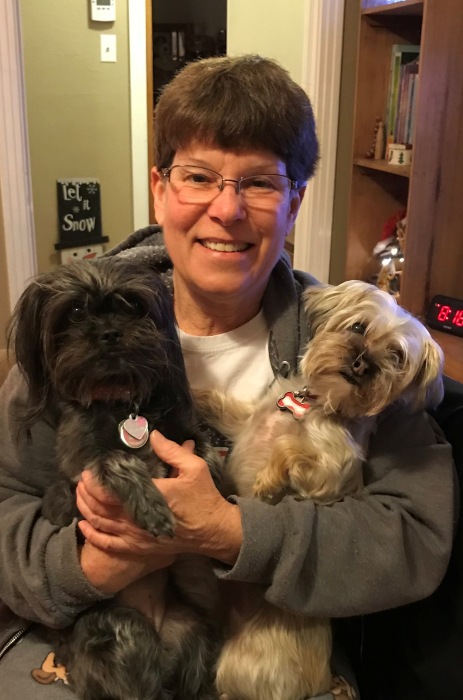
Born a year and three months after me, they were always more than first cousins, the ties between our families so intertwined that, in many ways, we were just as much siblings as we were cousins. I remember the first Sunday their dad brought them to have Sunday breakfast with Grandma, a ritual he had held ever since his mom and dad had moved from the farm into the small community nearby.
Donning a long white apron, he always fried the bacon and eggs while Grandma sliced the homemade bread and opened the jelly jar. When it came time for the twins to start school, they came along with their daddy to Sunday Mass and then to Grandma’s for breakfast. Grandma had three bar stools that we had used, so now we pulled two more chairs up to her snack bar, the twins all eyes as they witnessed the Sunday ritual for the first time.
As Mother Nature is prone to do, always providing us with surprises, she gave Sherry the personality of her dad, while giving Jerry the personality of his mother, a flip of the genders that was clear as day from the first moments of their lives. She was a soft glow; he was a firecracker. She followed; he led. She spoke so softly you had to bend your ear to hear her; he spoke so fast spit flew out of his mouth. I like to think that Sherry was the calm to Jerry’s storm, or the low tide to his high tide.
Perhaps Plato was right when he argued that we are always half the person we were meant to be, suggesting that the god Zeus cuts every person in two, like an apple that is halved for pickling, condemning us to always look for our other half. Twins, he suggested, already complemented each other, bringing together the two halves into a whole.
Sherry became best friends with my younger sister, a bond that would last through the years, both girls generally quiet and unperturbed, staying clear of trouble. Jerry became best friends with my younger brother, the two joined at the hip, as the expression goes, meaning where one went, the other went, usually in the direction of trouble.
And while Jerry liked to run free rein, Sherry would pull gently on his reins, when she could, especially in school, where she took to studies more easily than he did, seeing the confinement of the desk less a punishment than Jerry did. In the process of helping Jerry with school, she was being tutored in a lesson that stayed with her all her life long, learning to take care of somebody else. She was growing into her most defining characteristic–bighearted.
A terrible and terrifying blow came to Sherry when she was only fourteen, the loss of her twin, a cruel separation forced upon her by misfortune, her other half taken from her and from their family when a car crashed into him while he was bicycling back home after a late afternoon of fun at the nearby river.
Tragedies leave behind scars, seen and unseen, each person’s life touched by tragedy in the same way, but also in different ways. Many years later, at a family reunion, when all the sets of twins in the family were asked to pose for a photo, Sherry stayed in her chair, telling someone nearby that she wasn’t sure if she should stand up for the picture, since her twin was no longer alive. At one and the same time, she knew that she was a twin, but she also wasn’t a twin, Jerry’s death leaving her displaced from both worlds.
Her mother never recovered from the death, not really, her heart shattering, and while it was stitched together, the sutures remained, her heart never beating the same again, less vibrant, less happy, less at peace. Her sadness turned inward, causing dark moods, and turned outward, causing a hardness that was not there before.
Her dad, suffering the death of his son, carried the pain differently, keeping it locked away in his heart, a tabernacle not of gold, but of flesh, continuing to care for his other children, trying to spare them as much pain as he could, his big body a protective wall of defense, striving mightily to construct a normal life for them out of these abnormal circumstances.
At fourteen, Sherry became the oldest in the family, a role until then shared with Jerry, but one she would carry on her own for the next half century, a role requiring her to step forward, to take charge, to be an example, just a few of the expectations bestowed on the eldest in the family, duties and responsibilities incurred by the fickleness of birth order.
Even then, she stepped into the role, caring for her younger siblings, doing more than her fair share of the work, being their anchor in the topsy turvy twists and turns of life. The first to help, the first to give, the first to let others go first, Sherry became more than just the big sister, and more like a guardian, a caregiver. Never complaining, always cheerful, she showed her heart was as strong as it was tender.
That same heart she gave to the man she would marry, Chris, when she was 21-years-old, and the same heart she would share with their three children. Never rich in material things, she and Chris were rich in the things of the heart, a house full of love and generosity and kindness, more, truth be told, than its small walls could contain, expanding beyond its front doors, embracing everyone they met.
Sherry began work as a teacher’s aide in the local school, working in her quiet and unseen way, caring for other people’s children in the same way she cared for her own, endearing her to the children and to their parents, some saying in later years, “She raised our children for us,” words recognizing she was more than an employee, almost a member of the family.
When her dad died of cancer, Sherry was only 35-years-old, too young to lose a parent, another shift in responsibility landing on her shoulders, as she stayed near his bedside as his time came to a close, caring for him as he had cared for her, the bigness of her heart never more clearly seen. His body was carried out of the church as the Christmas carol “Silent Night,” always his favorite, was sung, the loss forever bringing a poignancy to the holiday season.
Five years later, she would have to say goodbye to her mother, who died suddenly, without warning, leaving Sherry to step into the role left empty by her mama, becoming the matriarch of the family, the glue that held everyone together. Again, without complaint, without second-thought, she did what was expected, never half-hearted, always whole-hearted in everything.
Were some to suggest that a shadow was always hanging over her shoulder, they might be justified in saying it, because she seemed not to get a break from life, but received more than a fair share of those things that would break a weaker person’s will to live. Her husband, Chris, suffered a debilitating stroke, leaving him unable to care for himself, never recovering the last several years of his life. There at his side, through it all, was Sherry.
When I visited Chris in the rehabilitation clinic, where they hoped to teach him to walk again and to count numbers again, Sherry was there with a smile on her face, refusing to show despair or desperation, although both would have been reasonable in those circumstances. She was the proverbial “glass is half full” person, finding cause to hope, to believe, to trust.
Bringing Chris home when rehabilitation had ended, she adjusted her life, accepting the new normal that had come to them, caring for him because she could not conceive of doing otherwise, until he also was taken from her, as too many others had, another painful loss that easily could have shut down her heart, but she refused to stop loving or to stop giving.
When not attending to his needs, she worked in her yard, finding solace and support in nature, where beauty seemed to abound more abundantly than it had in life, her backyard her sanctuary, meaning not so much a place of refuge, although it did replenish her spirit, but more so a holy place, where she could feel the divine presence all around her, in the bark of her dog, or in the blooms on the plants, or in the gentle caress of the wind. She told me once she would have gone crazy without the peace of her garden.
After Chris’ death two and a half years ago, she returned to her work in the school, saying it was what she needed to do, wanting to be with the little children again. Her daughter moved in with her, taking a job in the same school, sharing their days. It seemed, for now, that Sherry had escaped the shadow that seemed to cross her path, always seeking to steal her happiness, although she never permitted it to be the victor in this most personal of fights.
That she should be diagnosed with cancer just two years after Chris’ death seemed to us especially cold and cruel, both audacious and pugnacious, like a bully that pulls the wings off of a butterfly, destroying its life, stealing its beauty. Coming as no surprise, doing as she had done before, she accepted the hand dealt to her, never allowing bitterness or unpleasantness to burrow into her heart, choosing to face these circumstances with her customary good cheer and good nature.
Even when she had to endure the ignominy of a broken insurance enterprise and a broken medical profession, spending entire mornings on telephone calls with one or both, often getting no response from either, she stayed true to herself, undaunted, unafraid, lion-hearted to the end, her courage her last gift to the rest of us. She taught us how to die well.
Confined to a wheelchair and then to the bed, her sisters said she, in her last days, had taken on the look of her godmother–my mother–the resemblance more than coincidental, I would suggest, since both of them were very much alike, having hearts too great for their chests, filled with love that only increased, never decreased. That they should have looked alike at the end is a high compliment to both of them, godchild and godmother, two of a kind.
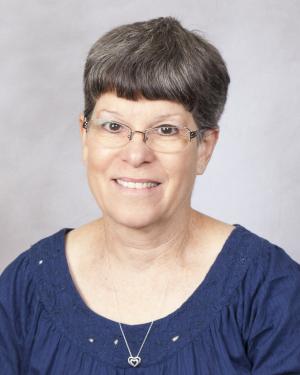
Under normal circumstances, a person with a heart as big as Sherry’s could expect a crowd on hand to say farewell to her, a last tribute to someone whose heart was always open to them, but that also would be taken from her by the cruel circumstances of the times, as the Covid curse forbade a proper service for her in the church she loved, and allowed only a simple service for her in the cemetery, aside her husband’s grave.
While this last injustice wounded us who loved her, I do not believe for a moment that it wounded her, for the last arrow of adversity could not touch her here, for she was safely away from its sharp and piercing head, wings carrying her far from harm’s way. With her kind heart no longer pummeled by the pains of this world, I am left now to ponder the mystery of how it is that a person who walked so lightly upon the earth should leave behind an impression so deep. The only others who have done so we call angels.
–Jeremy Myers

 Sunday Brunch