Exiting I-20 as you head Abilene way and snugly tucked away on East Broadway Street in Sweetwater, you’ll see an old faded sign that reads, “Allen’s Family Style Meals.” Whatever you do and however behind schedule you think you are, stop and pull into the small parking lot. If you missed the sign, turn around and look again. This is as close to home eating as you’ll get in our wired-up, plugged-in, high tech world.
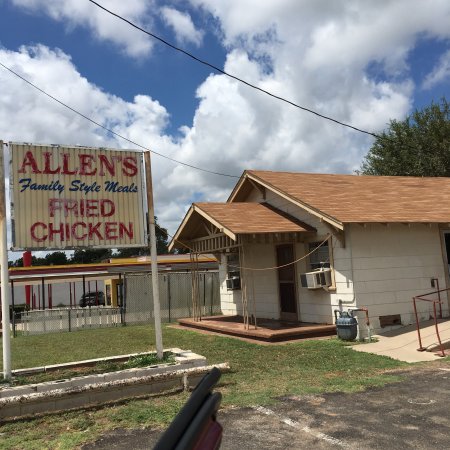
Sweetwater is an old railroad town, the first train coming through in 1881, the last passenger train going through in 1969, and Grandma Allen starting her eating place in 1952 in her own house. Over the years, with more customers coming in, she knocked out a wall or two until all the walls–except the outside ones–were removed to make room for six tables, each seating 10 people. That’s still the way it is at Allen’s today.
So is the fried chicken, the main dish served at the place. Suzanne Allen, Grandma’s granddaughter, works the kitchen while her brother Billy works the main room. Out of town customers sometimes call it a hole in the wall, but they’re not saying it to be mean, just explaining how it isn’t your usual run of the mill restaurant with small tables and four chairs, fancy-printed plastic-covered menus, and waiters that talk without a Texas twang.
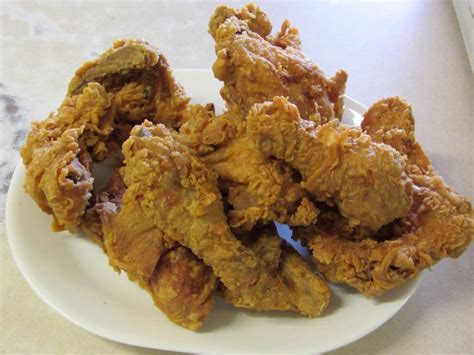
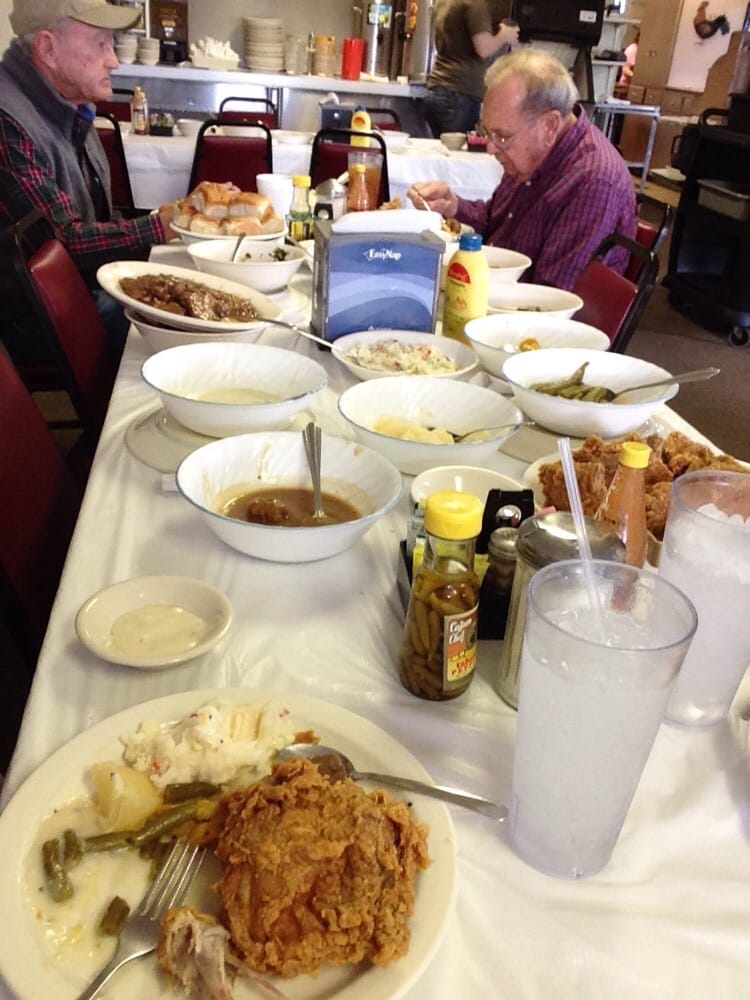
Aside from the fried chicken, the same old recipe Grandma Allen used, and the side dishes heaped up with okra, cream corn, mashed potatoes, green beans, and squash, you’ll find something else different at Allen’s. Everybody sits down together at the same table, complete strangers, long-distance travelers, hometown folks, all God’s chilluns, acting like they’re family, which explains rightly where the name “family style meals” came from. As one happy partaker said after a big meal and a full stomach, “If you don’t know them when you sit down, you will when you get up.”
Occasionally, somebody doesn’t read the sign carefully or doesn’t take the words seriously, walking into the eating place, glancing around with wide-eyes at the conversations and the camaraderie, then making a beeline for the door without even trying the big platter of fried chicken that is passed around the table from person to person. Some people, it seems, don’t want to sit down to eat with a stranger. They prefer to keep to themselves, missing out on the best fried chicken in West Texas and on the good chance of turning a stranger into a friend.
A regular at Allen’s says going there is like sitting down to Sunday dinner after church. He’s right, at least as it was back in the day when families ate meals together and went to church on Sunday. Probably the analogy doesn’t mean a lot to most people these days. Still, he’s right. We also might be right even to stretch the analogy further to say it’s like sitting down at the Eucharistic table in church on a Sunday.
In many ways, we have to say, it has the same feel, with strangers from all walks of life walking through the door, sitting down together, breaking bread, and somehow or another deciding these other people aren’t so bad, even could be companions, who knows, maybe even family. As one regular says, “It’s family here.”
Here we could benefit from a little Latin learning, which never hurt anybody, even if it is called a dead language, something you wouldn’t want to tell the ancient Romans, unless you want to go up against a gladiator or two, becoming amusement to the fans on the stone benches in the Coliseum. With just enough knowledge of Latin, not so much that we become the smart-aleck in the front of the classroom whose hand always is the first to shoot up in the air, like an old Jack-in-the Box, but still enough to get us a B on our report card, enough to make Mom and Dad see how clever we are, we learn there is a connection between the word “companion” and the phrase “breaking bread.”
That three-syllable word, “companion,” known to everybody, insuring that it will never make it to the Sunday edition of the crossword puzzle in the New York Times, comes from two Latin words–com and panis–the first meaning “with” and the second meaning “bread.” Combining the two (note the same Latin root com) gets us to companion, literally meaning someone who breaks bread with another.
Overused and underappreciated, the word beckons to an earlier time when sitting down at table with someone meant more than filling our stomachs, implied more than making small talk, suggested more than a meat and potatoes thing going on. To break bread with another person was to form an unbreakable bond, the ordinary act of eating now serving as a means to bring people together, allowing them to overlook petty differences, at the same time giving them a chance to see one another as brothers, as sisters, as family. Yes, say it, as “companions” on the road of life.
For this same reason, nothing was more traitorous than to sit down at table with someone and then to turn against him, all the gruesome stuff of “The Game of Thrones”, where treachery is second-nature and where banquet halls become blood baths. Although living in a different time and in a different place, the Psalmist also must have experienced the anguish of betrayal by someone who broke bread with him. He writes, “Even my close friend, in whom I trusted, who ate my bread, has turned against me” (Ps 41.9).
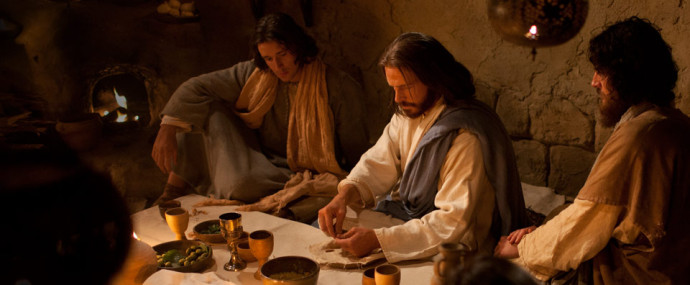
If we want to understand why the peeved Pharisees turned into bellicose banshees when they saw the preacher man from Galilee sit down at table with prostitutes and sinners, well, the answer is found in that one word, “companion.” When he broke bread with low-life grifters and with off-the-grid outlaws and with stiletto-heeled not-so-nice-ladies, he was putting a marquee outside the dining hall that said everybody was pretty much the same, more or less, all children of the same God, including crazies, con artists, and the ethically-challenged. At his table, no one was excluded. There was room for everybody. Pull up a chair.
The Pharisees, like a few of those stand-offish folk who get out of Allen’s in Sweetwater as fast as they got into it because they don’t want to share a table, had no desire to dismiss the differences between themselves and others, turning their backs, turning up their noses at the thought of taking a seat beside a sinner, stranger, or social outcast. No way would they stoop to such desegregation. Holier-than-thou was more than a cliche to them, in time becoming a way of life, permitting themselves no hand-to-hand contact, just a lot of hand wringing, hand sanitizing, and enough hypocritical sleights of hand to make a card shark look like a kid playing a hand of Old Maid cards.
In a stroke of genius, in a radical departure from his times, the Galilean instructed his followers to do as he did, insisting that they break bread with anybody and everybody, especially inviting the defamed, the deformed, and the defeated to a place at table, elevating an ordinary meal into a sacred moment, an ordinary table into an altar, an ordinary loaf of bread into manna from heaven.
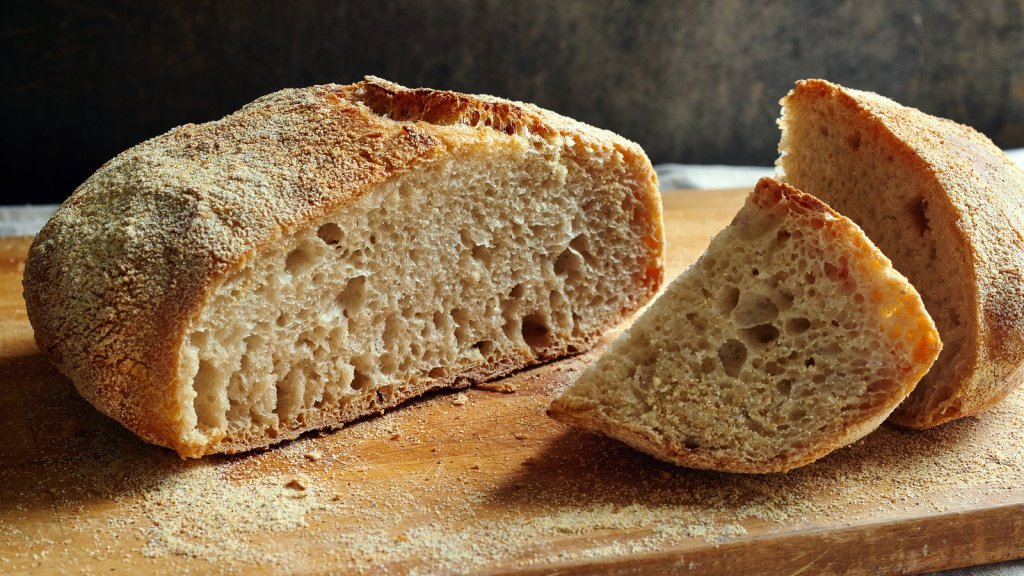
The peace activist and advocate for the poor, Dorothy Day, once explained that the moment of her conversion came when she watched rich and well-decked people kneel beside their butlers and maids at the communion rail of a church in New York City, all partaking of the same bit of bread put before them, not differentiated, at least for the moment, by status, by sanctity, or by suit and tie, but united by a beneath-the-surface cord of selfsame origin and selfsame destiny, what the Galilean would call a family, understood by him to mean a bond of love, not a band of blood brothers.
Living as we do now in a time of fast food, fast-paced lives, and the fast track, we have, for the most part, relegated the family sit-down meal to the attic, along with our outdated clothes and the old record player, these days grabbing a sausage biscuit at the drive-up window of McDonald’s on our way to work or ordering take-out from Pizza John’s when the day is done. For their part, psychologists bemoan this loss of family time, especially at the table, seeing this vital chance to reconnect unfortunately sacrificed on the altar of more important things to do.
With the fragmentation of families on the rise, sharing a meal together at a table at least once a day offers a defense against further deterioration of the family, these few minutes together reinforcing the familial bonds against the hurricane winds that would destroy not only the roof over our heads, but more importantly, the very foundation of our family life. That the dining room and the dining room table no longer exist in most homes is proof enough that having family meals is now an uphill battle, the car seat more often the place where families eat together today, and take-out containers more often the plates that we eat off of. Bob Dylan had it right when he sang, “The times, they are a changin’.” And, by the way, that was over fifty years ago.
Growing up in more of a “Leave it to Beaver” day and age, rather than the current “Mean Girls” tempo of today, I had the benefit of family meals at a table in our kitchen three times a day for most of my childhood. Mama cooked breakfast, lunch, and supper, every day, every week. It was so ordinary that it became extraordinary only in hindsight. She started each meal from scratch, never frozen pancakes out of a freezer, never frozen family-size chicken casserole out of a bag, never frozen corny dogs out of a box. Mama’s kitchen had no shortcuts, no microwave, and no salt substitutes.
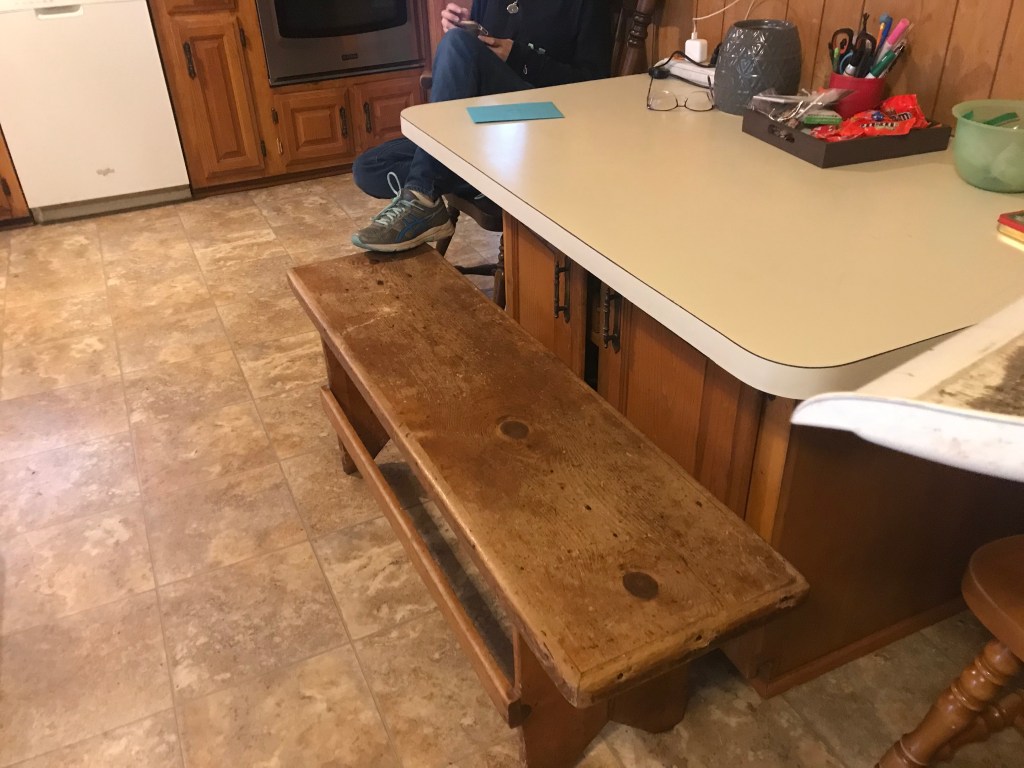
Once in a while, I walk through Mama’s old kitchen–it still is in family hands–and the old table we sat around still stands where it always stood, three benches on three sides, with my dad’s chair at the head of the table. Because there were so many of us, my uncle, a carpenter by trade, built three benches that fit handily around the table, allowing more of us a place to sit, until even the benches weren’t enough, a few of the younger kids using a step or two on the nearby staircase as their “place at the table.”
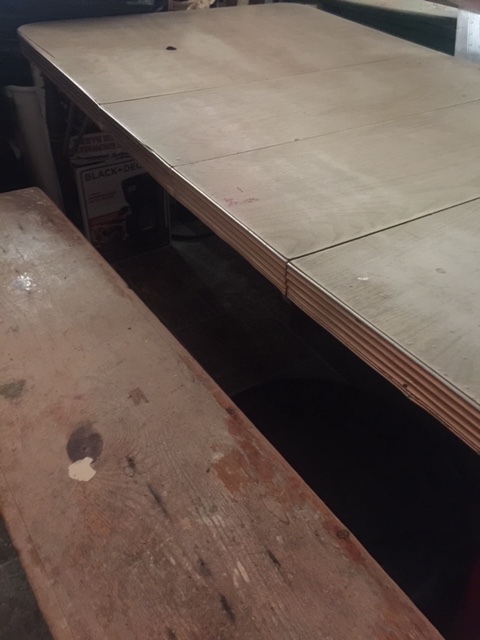
I like to think that the family closeness we have to this day had its start on those benches and at that table with the two-leaves and a smoothed-away surface, where we each had our regular spot on one of the benches, had our favorite piece of fried chicken, and always had our glass of sweet ice-tea, poured in an old jelly jar if we were old enough to hold it in our hands.
Strangely enough and thinking back to those days, I don’t remember Mama sitting down with us, but rather always working behind the stove and filling our plates. I guess she ate, but most of the meal time was spent on her seeing that we ate. Even in later years, when we were grown, she usually sat down last, not filling her plate until we had filled our own. Maybe she wanted to be sure there was enough for everyone. That would be a Mom thing to do.
When Mama died, she didn’t have much to her name, except her kids, as she once told me. She also had those three benches, varnish disappearing years ago, nicks and scratches and gouges visible on them like tattoos on a member of a motorcycle gang. They are, in my opinion, the finest pieces of furniture she left behind, heirlooms more valuable than fancy jewelry, a heritage more precious than any big mansion, an inheritance more prized than any trust fund. The reason is simple. Sitting on those benches, we broke bread together. There, we became a family.
Reminiscing on his days in Congress, remembering a time before rabid partisan politics, a retired congressman recently reflected on what made it possible once upon a time for conflicting interests and competing parties to work together to achieve the common causes of our country, putting aside bickering and badgering and battling long enough to do the people’s work. He decided that the glue that kept them together was the simple fact that they could eat a meal together.
When they took their lunch break in the congressional dining room, he said they sat down at a table together, not by party affiliation, but by something stronger, something better, something more enduring, a recognition that we are together in this effort called life, and if we are going to make it a halfway decent experience for all of us, we have to leave our differences at the door as we sit down to eat a meal. The same, he said, happened when they left the chambers for the day, often meeting at a downtown restaurant in Washington to have a meal together, finding in that table fellowship more than a shared meal, but a shared humanity.
It isn’t that way anymore, he admitted, with the congressional dining room looking more like a high school cafeteria than a place for elected officials, with each clique having its own table, and nobody daring to sit at another group’s table. The labels may have changed, not so much geeks and jocks anymore, but the rules and the roles stay the same. There aren’t many companions left in Congress.
For her part, Mama always liked to stop at Allen’s Family Style Meals when she went that way to visit one or another of her daughters who lived in West Texas, finding the homey atmosphere at Allen’s to be perfect for the palate, as good as the fried chicken served there. She never had a problem with sitting down beside a stranger at one of the tables because, nine out of ten times, she discovered soon enough that she had some kind of connection with that person.
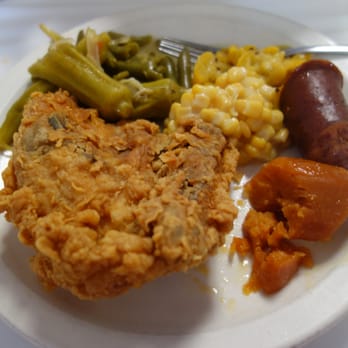
As the conversation got going and the chicken got eaten, she had made a friend by the time the meal was over and before she had grabbed her purse to pay the bill. I swear it had all the makings of a meal you could see the man from Galilee loving, as he took another piece of fried chicken, chatting with one or the other person seated on a chair at the table with him, a big smile on his face because he loved all these people, licking his fingers because the chicken was finger-licking good. I like to think he would have called it Eucharistic, meaning it was something worth giving thanks for.
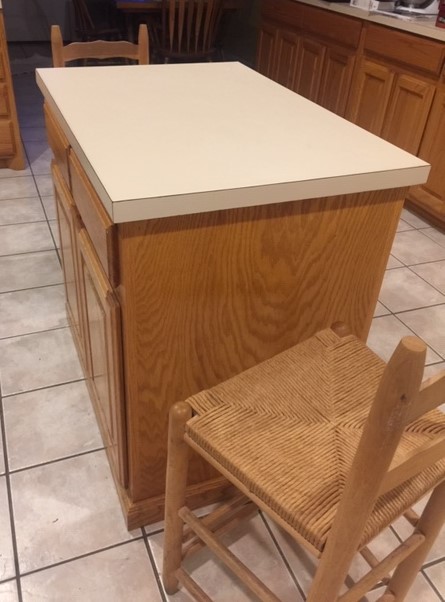
These days, one of my brothers and I share the breakfast table, even if it is just a small island in the kitchen. We’re both early risers, both drink black coffee, both like a hot meal to start the day. We’ve made a ritual of it, with the usual elements of a ritual, complete with complaining about the cold weather, trading family news, and popping a multivitamin after we’ve had our bowl of cream of wheat, a few strips of bacon, and a piece of toasted bread.
And because it is a ritual, we do it every day, and like the best of religious rituals, my brother always says thanks as he walks out the door. And in those moments together, my little table becomes an altar, and the bread we break becomes holy, and the meal we share becomes Eucharist for us, because we do as the Galilean said to do. “Do this in remembrance of me.”
–Jeremy Myers

 Sunday Brunch