“For if you love those who love you, what recompense will you have? Do not the tax collectors do the same? And if you greet your brothers only, what is unusual about that? Do not the pagans do the same?” (Matthew 5.48)
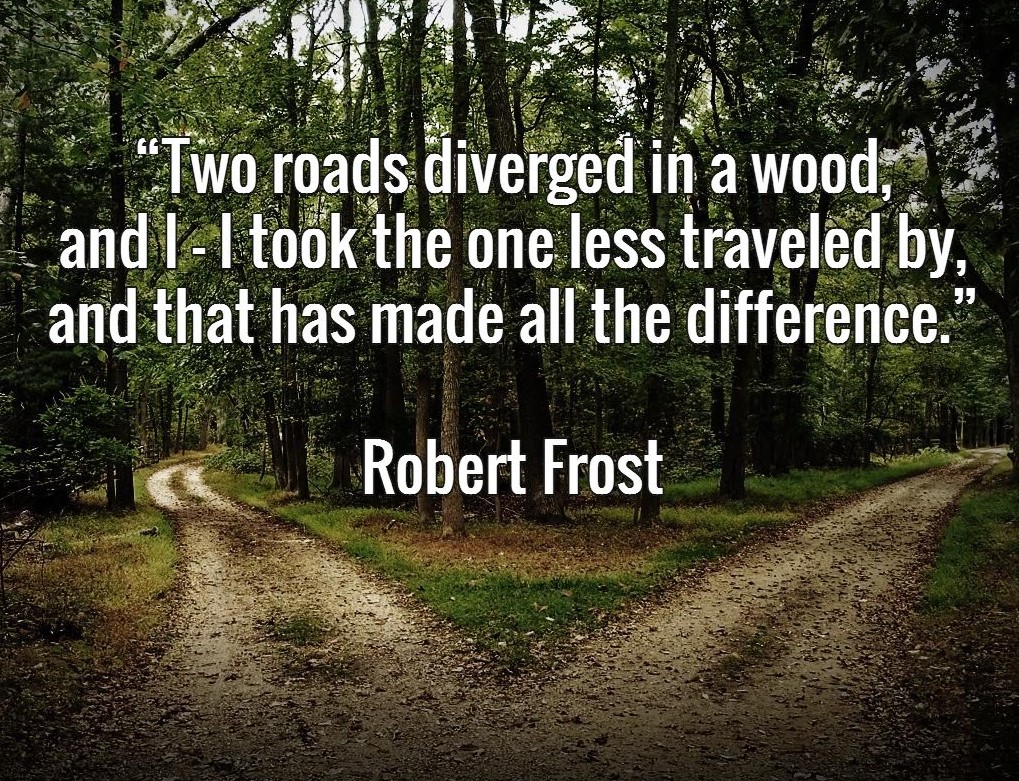
He graduated from the University of Pittsburgh School of Medicine. And then he took the road less traveled. He joined the International Medical Corps, an organization that sends medical personnel to emergency situations around the globe when a humanitarian crisis is underway. His work has taken him to refugee camps, to Iraq after attacks by the Islamic State, to war zones in godforsaken places.
And how does he explain why he does what he does? “Everybody wants to have an impact on the world,” he says. “The greatest impact is not to go to the places where everybody goes to. The greatest impact is to help the people that nobody wants to help.” He adds, “If it was easy, everybody would do it.”
Those sentiments reflect well the words that the Rabbi from Galilee, called Yeshua bar Yossef, spoke when he preached a sermon to a group of his followers who rested on a hillside, listening closely to his call to be exceptional, not to be just like everybody else. He urged them to seek a higher standard than the one used by the people around them, to exceed beyond the expected, to do the work nobody else wants to do.
The Galilean Teacher puts a clear challenge before the crowd when he says to them, “If you love those who love you, what recompense will you have? Do not the tax collectors do the same? And if you greet your brothers only, what is unusual about that? Do not the pagans do the same?” With these examples gleaned from the everyday experiences of the listeners in front of him, he urges them to become better than the tax collectors, better than the pagans.
That goal–to become extraordinary in a world content with the ordinary–remains the criterion for any who would become his follower even in this time and in this place, people brave enough to answer “yes” to the summons to become Christ for others. The response, now as then, comes from ordinary people like you and me, extraordinary in our ability to love others with a reckless, foolish, generous love that mirrors the love of the Galilean Rabbi.
As we seek to imitate that selfless love, a love he expressed equally to lepers pushed to the edge of society, to foreigners castigated in a new land, and to hungry people starving for a bit of bread, we remind ourselves that his way is not the way of the world, that his love for others goes over and beyond what we typically see around us. The fullest expression of that love, of course, is offered to us in his dying on the cross, where he loved others to the last breath.
Is there an easier way? Yes, it is the way that most people choose, the path that most people walk, the carefully-measured, self-protective generosity that most people practice. His way is difficult, which explains why it is not seen often in this world, and when it is seen, it is considered extravagant, or exceptional, or harebrained.
The Jesuit priest and preacher Walter Burhardt liked to say, “If you’re not hurting at all, it’s a pretty good sign that you’re not working at it.” With these words, he provided a means to determine if we are answering honestly and fully the call to become a follower of the Galilean Teacher, dismissed by his detractors as the carpenter from Nazareth, remembered now as a flicker of light in the darkness. Are we hurting at all? If we aren’t, then we may pass as decent tax-collectors and pleasant enough pagans, but we cannot claim to reflect the light of Christ.
A woman shared a story about an experience she had some years ago. Another woman appeared in her church one Sunday morning, unkempt in appearance, unclean clothes hanging loosely on her body. She had come from a group shelter nearby. The newcomer continued to show up subsequent Sundays, more often than not snoring through the sermon, her deep breathing heard by others in the church. Once or twice, she even forgot she was in church, lighting a cigarette before she realized what she was doing.
As we might expect, people in the church began to complain about the unsightly and uncouth woman. Some said that she didn’t belong there, while others voiced their opinion that she shouldn’t be allowed to ruin church for everybody else. More than a few complained that the woman ate more than her share of the cookies that were served at the coffee hour after the service.
The woman telling the story grew tired of all the complaints she heard from others, who insisted loudly that this strange person didn’t belong in their Sunday morning service. So she decided to do the unimaginable, the unspeakable, the untried. She made an effort to become friends with the new woman.
The next Sunday, rather than sitting in her usual place, she sat beside the unwelcome visitor. When the snoring started, the parishioner gently touched the woman to awaken her. When the woman reached for a cigarette, her new friend quietly reminded her this wasn’t the time or the place for a smoke. When she lost her place in the hymnal, the woman beside her showed her the right page.
This went on for several Sundays. After a while, the stranger seemed less standoffish, talking now with other parishioners, making eye contact with them, even speaking a few words to the pastor after the service. Each Sunday, the new woman found her new friend sitting beside her in the pew, smiling at her, making her feel less a stranger in a strange place.
Some months passed when the pastor received a phone call from the woman’s social worker who explained to him that the woman now coming to his church had never been accepted before by any group and had not been able to have a single positive relationship before finding herself in his church.
The social worker told the pastor that the woman now was showing big improvement in the group home, was making friends, was reaching out to others, something she had never done before. She even wanted to bring her friends with her to “her church.”
The social worker ended the phone call, telling the pastor, “Thank you for welcoming her. I’ve never been to your church, but I know that it is an exceptional place.” As the pastor put down his phone, sitting in his office, he pondered, as he had never before, that one word that the social worker had said to him–exceptional.
Today, the teachings from the Galilean Rabbi that serve as our guide on how to live in this world prompt us to ponder that same one word–exceptional. Are we exceptional in our love for others, or are we doling out our love in the same measure as everybody else? Are we the exception to the rule, or are we just like everybody else? The answer to that question determines if we are Christ-for-others, or if we are tax collectors.
–Jeremy Myers

 Sunday Brunch