“The reason why I came baptizing with water was that he might be made known to Israel.” (John 1.31)
Back in the day, when settlers moved to the Great Plains to start a new life, they were allowed by the Homestead Act of 1862 to claim 160 acres of land as their own, so long as they made improvements to the property by building a house and by cultivating the soil. Six months after staking their claim, they were expected to return to the local Government Land Office, where they had to state that they had built a structure and had plowed the ground. Then they were deeded the land.
But it was not enough that the settler came on his own to claim the land. By law, he had to bring two neighbors along with him who would testify that the man had done as he said, giving their word that a shelter had been built and the land had been plowed. Without the testimony of these two witnesses, the land would not be deeded to the settler.
While there were some who worked around the law, claiming a lean-to barn was a shelter, or having relatives claim the land in their name, although they were nowhere near the site, still it worked for the most part. The success of the law was because of the two witnesses required to vouch for the claimant. Back then, when a person put his word to something as true, you could take it as true.
The Scriptures today offer us a situation similar in some ways to those early land claims in this country. The Teacher from Galilee, preaching in the towns of the region, claiming he knew the heart of God, met with skepticism from many who were unsure of who he said he was, raising questions about believing in him or following after him.
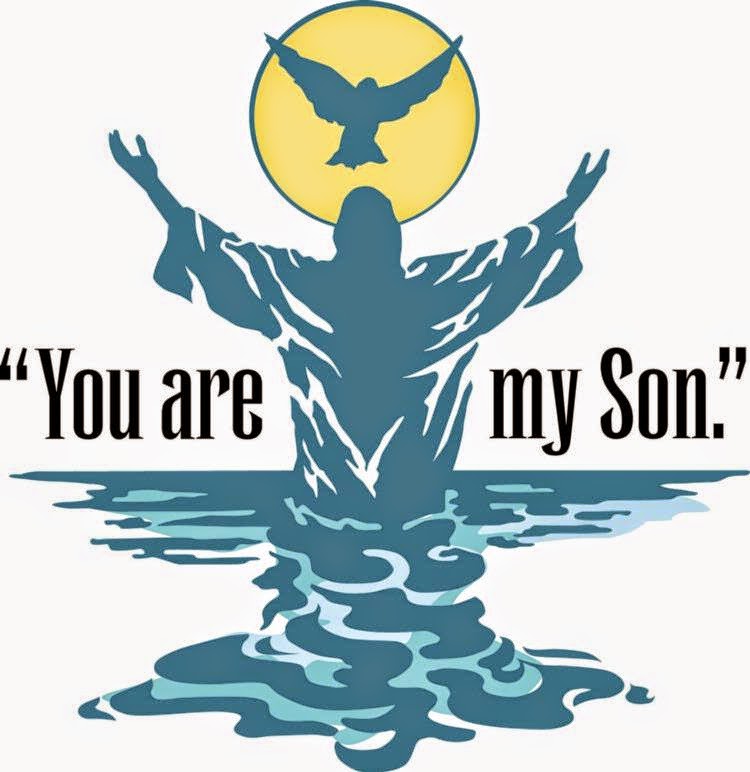
Then John the Baptist, the prophet of the Jordan, stood before the skeptics to say, “I saw the Spirit come down like a dove from heaven and remain upon him. Now I have seen and can testify that he is the Son of God.” With the word of the prophet as a personal witness, many others came to believe in the Teacher as the Son of God, finding John to be trustworthy, bringing with him the weight of the ancient prophets of Israel.
For our purposes, removed as we are by two thousand years from the prophet of the Jordan, the times now require other witnesses, people who–like John–can testify to the truthfulness of the Galilean Teacher, those who have come to believe that the Rabbi from Galilee speaks for the heart of God, bringing those who believe in him closer to the ways of the eternal God.
If the Galilean Rabbi’s teachings are to be taught and if his way of life is to be followed, then witnesses must stand before us to tell us his words and to show us his ways. Without such witnesses, honest and upright people, the path to God that the Galilean Teacher put before us becomes overgrown by the thickets of this world, with no well-worn way through the darkened woods left by the footprints of those who have walked before us on the way.
Seen in this way, the responsibility of the witness for the Risen Lord is great, no less important than the witness of the first followers who saw and believed, who heard and listened, who stood up and spoke out. As they did in their time, we must do in our time. We witness to the same truth, unchanged through the countless centuries, that God walked among us in the person of Jesus of Nazareth. Or as the spiritual writer William Sloan Coffin once put it, “Jesus is God’s love in person on earth.”
So, how are we to be credible witnesses? What are we to do so that our testimony is believable? How do we convince others to believe in the same Lord and God in whom we say we believe? The answer is obvious. Our words and our deeds are to be so closely aligned to the words and deeds of the Risen Lord that the one who looks upon us sees the Holy One, and the one who listens to us speak hears the voice of the Holy One. We become Christ for others.
A writer named Cecil Northcott in his book, “A Modern Epiphany,” tells this story. A group of young people from different countries attended a camp. One evening, as it rained outside, the campers were discussing various ways of telling people about Christ. At some point in the conversation, some in the group turned to a girl from Africa. “Maria,” they said, “what do you do in your country?”
Maria answered in this way, “Oh, we don’t have missions or give pamphlets away. We just send one or two Christian families to live and work in a village, and when people see what Christians are like, then they want to be Christians also.” With this personal story, Maria offered a clear example of what it means to be a witness to Christ Jesus. A witness makes credible the words of him of whom they testify.
In the same way that the Teacher of Galilee revealed the face of God whom he called Father, with an outpouring of love in words and in deeds, so we who follow him now must reveal the face of the Teacher by an outpouring of love from our words and our deeds. As Jesus became the enfleshed word of God, we become the enfleshed word of Jesus.
This responsibility to witness is shared equally by all who have been baptized by water into this new life, taking off the ways of the world and putting on the ways of the Christ, living now with the mind of Jesus, loving now with the heart of Jesus. Should we fail in our testimony or way of living, then the message is doubted because the messenger is doubtful. Mahatma Gandhi spoke of this failure when he said, “I’d be a Christian if it were not for the Christians.”
Over a decade ago, Mike Yankoski wrote of the months he spent living as a homeless person among the homeless on the West Coast. While struggling to find food and a place to sleep, he often encountered outright disdain by so-called Christians who wanted nothing to do with him. Other times, less often, he found a Christian man or woman who lived as Jesus did.
His months among the poor and the rejected left him with a clarity of mind and heart. He wrote, “Why do we so often overlook obvious ways to show the love of God we so loudly proclaim?” He answered, “If someone’s thirsty, give them a drink! If someone’s hungry, feed them! I mean, this is not complicated stuff.” He’s right. It isn’t complicated stuff to witness to Jesus. It’s as simple as loving all others as Jesus loved all others.
–-Jeremy Myers

 Sunday Brunch