“When Jesus was born in Bethlehem of Judea, in the days of King Herod, behold, magi from the east arrived in Jerusalem.” (Matthew 2.1)
In the book he wrote, former President Jimmy Carter tells a story about his mother, Lillian Carter, more affectionately dubbed “Miss Lillian” by the press during his presidency. It was Inauguration Day in Washington and President Carter was in the motorcade driving down Pennsylvania Avenue. He had decided to walk down the street for part of the parade and Miss Lillian had been told not to wander off and not to speak to the press, which would have delayed the motorcade.
Once the Carters were out of the car, Miss Lillian made a beeline to where some press people were standing and began talking to them. Being a contrarian was part of her charm, winning her many points with the news people. As she stood on Pennsylvania Avenue talking to them, ignoring the Secret Service men shaking their heads at her, one of the reporters asked Miss Lillian if she was proud of her son. Without hesitation, she replied, “Which son?”
With that answer, she surprised the reporter, as well as the other members of the press, making it clear to them that she was proud of both of her sons. The fact that one of them had been sworn in as President of the United States minutes before did not make her any less proud of her other son, Billy, a farmer back in Plains, Georgia. Miss Lillian did not make distinctions between people based on the things that the world considered more important or less important.
Some years later–in much the same way–when her son Billy’s beer business had its ribbon cutting ceremony back in Georgia, she was asked whether or not she would attend. She answered, “I attended Jimmy’s inauguration, didn’t I?” As before, Miss Lillian’s answer surprised others, but also showed her to be a person not swayed by the allure of the powerful. Like a Galilean Teacher many years earlier, Miss Lillian seemed to understand that the ways of God do not align with the ways of the world.
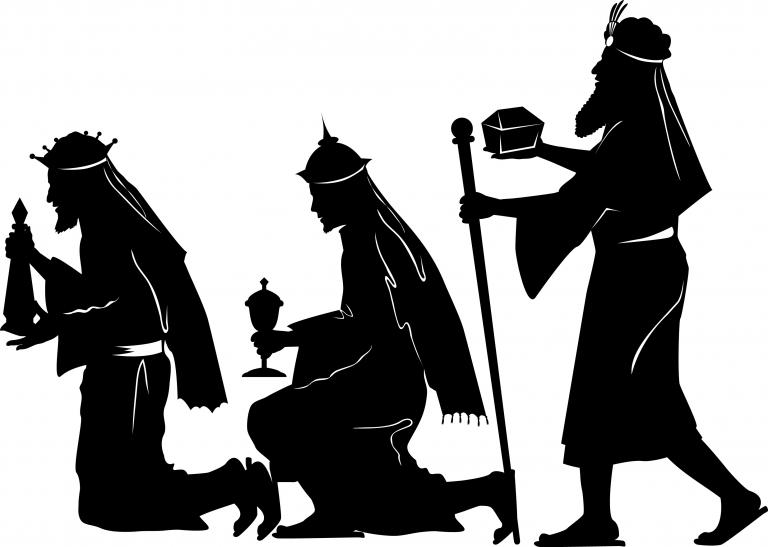
The writer Matthew provides us with a similar contrast in his story of the Magi that is told to us today in the Scriptures. At first glance, it is a familiar story, one that every primary school child can recite by memory, with three men riding on camel back, making a joyful journey, searching the stars, each step bringing them closer to the child in the crib in Bethlehem. Not only is the story told in Sacred Writ, but it also is memorialized in music, such as in the song, “We Three Kings.”
As the story goes, when the starlight shines on a shelter for sheep, the Magi find within it the one they have sought, now offering him fabulous gifts of gold, frankincense, and myrrh, then returning to the East after their long sojourn. The Christmas story would be incomplete without the Magi, their journey working well in Christmas programs, providing a fascinating subplot to the story, making a majestic addition to our manger displays, as it brings caravans and camels and crowns into the stable.
More importantly, beneath the surface, at second glance, we find a subtle subtext to the story that subverts many of the world’s suppositions. Cleverly, Matthew, who writes this twist in the story, invites us to find this deeper meaning, like a miner panning for gold in a running stream. This closer inspection of the story of these Magi reveals a grand reversal, a world turned upside down, a world where the poor are blessed, where the meek are lauded, a world where peacemakers are praised.
Read carefully and studied seriously, this text that we see here at the start of Matthew’s gospel becomes for us a narrative version of the Beatitudes that we will find a few chapters later in his gospel, where the blessings of the world bestowed upon the rich and the powerful are eclipsed by the blessings of God bestowed upon the least and the last.
As we know from the seasonal retelling of the story, the setting is in Bethlehem, a small village in Judea that was home to shepherds who grazed their sheep on the surrounding hillsides. There, in ancient times, a shepherd named Jesse lived with his eight sons. It was a dot on the map, with a town well in the center that the locals used, a scattering of caves dug into the nearby hills, serving as shelter for the sheep and their shepherds.
Yet, it is in this unremarkable place that two of the greatest figures of Biblical history would be born, first David, the youngest son of Jesse, who would become the most memorable king in the history of Israel, and then Jesus, the son of Joseph, who would become the long-awaited Messiah sent by God to save his people.
This is not the way of the world, where great people live in great places, such as Jerusalem, or Rome, or Alexandria, all capital cities, all places of power, all centers for the upper crust, but not in Bethlehem, a place that carried the smell of sheep in the air, a place that could disappear tomorrow and nobody would notice. Yet, it is in this very place that we see God tipping the scales in favor of the disfavored.
The grand reversal continues in the story as the Magi from the East, called wise men by some, called kings by others, called followers of yonder star by carolers, come to a cave outside Bethlehem to pay homage to a child sleeping in a trough used to feed animals, kneeling before the child, offering gifts to this baby born to nobody people, their names unimportant to anyone considered important.
Whereas in the world that we know, it is those without power who must find their way to those with power, kneeling before them as suppliants, begging from them some small favor, here it is the opposite, with kings going to poor people, with royalty bending before the powerless, with the have’s seeking something from the have-not’s, a sign at the start of this startling story that God does not deal as the world deals.
The familiar ways of the world, already turned on its head, continues as the story moves from the three kings of the Orient to the great King in his palace in Jerusalem, a ruthless man named Herod, who hoards his power as the powerful always do, destroying all detractors real or imagined, feasting on banquet tables of food, feeding on the bloodbath of his traitors.
Following the script for such men, suspicious of any threat to their power or to their position, Herod manipulates and maneuvers, breathing out his fury in a massacre that aims to destroy a rumored rival to his reign, the innocents sacrificed on the altar of his stuffed ego and his sick mind, murdering any and all small boys within his reach, as they cried out in pain and as their mothers clutched their dying bodies in bloodied arms.
But, as we see, the ruse does not work, a victory denied this wanton maniac, with his rival, a harmless child, safely escaping harm in the night, fleeing to far off Egypt, out of the reach of Herod’s military might, securely hidden in a foreign land, while the wicked sovereign shouts and screams in the silence of his upscale surroundings. This is not the way the story typically ends in the world in which we live, where the powerful decimate the powerless and where the poor die in their poverty.
Herod learns, much to his dismay, as all evil men do, that his power is powerless against the power of God. And it is his own wretched life that will shrivel up soon enough, his body that will rot from the inside out, his kingdom that will disappear in the sands of history, while the life of the child he sought will continue to live and to breathe and to be blessed by God, far from Herod’s conniving clutches, guarded not by soldiers in palaces, but by the hand of God in heaven.
Here, then, we see the writer Matthew planting the seeds of the story that will blossom as the child grows into a man, the man into a learned teacher, the teacher into the promised savior. Planted in the soil of this story of the Magi from the East, a grand reversal beautifully unfolds before our eyes, where, as the Teacher later will promise in his Sermon on the Mount, the poor will have the kingdom, where the meek will inherit the land, where the peacemakers will be called children of God. This grand reversal is at the heart of the story of God-among-us.
Those who knew her well say that early in Miss Lillian’s life she seemed to understand that the ways of the world were not the ways of God, an understanding that led her to break social norms when she felt they were wrong, an understanding that made her look out for the little people shuffled to the side by most everybody else, an understanding that compelled her to lift a hand to help those with little or nothing to their name.
Another example from early in her life proves the point. Much to the chagrin of her neighbors and contrary to the practices of the South, Miss Lillian made it her practice to allow black people to enter her home through the front door, rather than through the back door, as was done during the days of segregation. She invited them into her living room, where she sat and talked with them in the same way she would with her white neighbors. It was a grand reversal of the sort that God enjoyed, being the chief architect of grand reversals that he was and continues to be.
Now, in our time and in our place, the story of the Magi invites each of us to live out in our words and actions the same grand reversal, because it is the right way, because it is the way of the Galilean Teacher, because it is the way of God. If we are able to live each day in this way, then we have learned well the real lessons offered to us today in this story of the Magi from the East.
(Matthew 2. 11)
–Jeremy Myers

 Sunday Brunch