“When you hear of wars and insurrections, do not be terrified; for such things must happen first, but it will not immediately be the end.” (Luke 21.9)
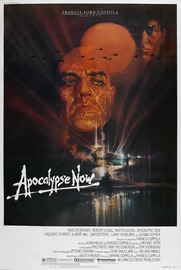
In 1979, the respected movie director, Francis Ford Coppola, released an epic film starring some of the biggest names in Hollywood, such as Marlon Brando, Robert Duvall, and Martin Sheen. It carried the title, “Apocalypse Now.” The movie attempted to portray the vileness and the treachery too often found in the human heart. Coppola had as his setting the Vietnam War, and the movie ended with one of the lead characters pronouncing, “The horror, the horror.” It is a movie not for the weak.
The Coppola movie is but one in a popular genre of movies that can be called “apocalyptic.” The movies in this category provide a cinematic experience of the end of the world. More recent and more recognized apocalyptic titles include the Avengers movies, the Hunger Games movies, the Mad Max movies, and The Maze Runner. There are many more because we seem to have a fascination with the end of the world. Obviously, there is some kind of existential angst deep inside our psyches about the annihilation of our home on planet Earth.
The origin of the idea of the Apocalypse is in the Judaeo-Christian religion, not in Hollywood. It has roots in late BCE Judaism when Jewish religious leaders were confronted with finding an explanation for the terrible suffering that the Jewish people were experiencing under foreign occupation. There seemed no justifiable explanation for such injustice, no end-sight for their plight. What did it all mean?
The response was found in their writings called apocalyptic. These writings projected a future where the wrongs being done to the Jewish people would be righted, where justice would prevail over injustice, and where the persecutors would become the persecuted. In this way, the writers sought to offer hope and solace to the people in their present suffering.
The Galilean Rabbi was familiar with this apocalyptic thought, since it had preceded him by a century or two. So, we find examples in his teachings of the same promise of a restoration and a restitution that also would be made to his followers who experienced similar suffering in this world. The Teacher understood that his way of life would bring an attack upon him and upon his followers because his teaching threatened those in power and those with everything to lose. And, as history has shown, he was right.
The scribe named Luke offers us one such occasion when the Rabbi spoke of this apocalypse and of these “wars and insurrections.” The imagery is cataclysmic, as are all apocalyptic images, because a better world requires the end of the corrupt world. And, as we know well, those who profit from corruption do not welcome a toppling of their empire. They initiate a blood bath. So, the Rabbi speaks in poly-chromatic pictures that paint the ugliness of a corrupt world on its last gasp as the forces of good prevail.
The cycle of Biblical texts that we hear each year places one or another of these apocalyptic texts so that they coincide with the end of the liturgical year. That decision seems to be a common sense one. We are prodded to look towards the final end as we come to the end of another year. One leads to another and both have something to say to the other. So goes the logic of the placement of the text on this particular Sunday.
Unfortunately, too many people choose to take these images in literal terms, although the Rabbi, like all who taught or spoke of the apocalypse, is speaking more in figurative terms—a way of describing the upheaval that his followers can expect in their lives if they follow him. “There will be powerful earthquakes, famines, and plagues from place to place, and awesome sights and mighty signs will come from the sky.”
Still, his early followers would find his figurative words often described well their future experience, as some were beheaded, others were burned on stakes, many were treated as outcasts, and too many were fed to the lions in the coliseum in Rome. They experienced the apocalypse, the end of their world, in real time.
The main point of apocalyptic teaching is not to plant fear or dread in the minds of believers, but the opposite. The core message is found in the Rabbi’s words to his followers, “Do not be terrified.” Or, later in the same text, he says, “By your perseverance you will secure your lives.” While the Galilean Rabbi wants his followers to be clear-sighted about the costs of discipleship, he also wants them to stay strong and courageous in the face of evil and adversity.
If good people give up or despair—the Rabbi says—then evil wins the day. Or as the 18th century philosopher, Edmund Burke, said in much the same way, “The only thing necessary for the triumph of evil is that good men do nothing.” But if the disciple perseveres and refuses to capitulate to the corruption of the world, then there is the possibility of that new world order envisioned by the Teacher, where the poor are blessed, where the hungry are fed, and where the blind are made to see.
We are told that the Rabbi was asked the question, “When are all these things about to happen?” And we hear him answer in this way, “See that you are not deceived, for many will come in my name, saying, ‘I am he,’ and ‘The time has come.’ Do not follow them!” Again, these are words of caution from the Rabbi to his followers that they do not dwell so much on tomorrow as they do on today.
If we live today the Rabbi’s words, then we will see that “the time has come” as the reign of God is infused into the world through our words and works, so much so that evil is destroyed and corruption is ended. On that day, the ways of God will have become the ways of humankind, and the world will be returned to the Paradise it was meant to be.
Fr. John Kavanaugh, a Jesuit priest and scholar, once commented on another apocalyptic text in the Christian Scriptures in this way, “Conceivably, the text is not so much a warning about the end of the world as it is a commentary on living in it. This day, this moment, this life, is the time to bear the fruit. Another year hurtles by. Seize the day.”
A good example of adopting this attitude towards the apocalypse was told by the Episcopal preacher and writer Barbara Brown Taylor. She shares a story about a professor who was asked to speak at a military base. He was met at the airport by a soldier whose name was Ralph. As the two of them walked towards the baggage claim area, the professor saw that the soldier kept breaking away for one reason or another. One time he helped an older woman with her suitcase. Another time he lifted two small children so they could see Santa Claus. Still a third time he stepped away to give someone directions. Always, he came back with a smile on his face.
The professor observed it all as it happened and he was impressed by the soldier’s kind actions. He asked him, “Where did you learn to live like that?” Ralph, the soldier, answered him, “During the war.” He explained that he had a tour in Vietnam some years earlier. His job there was to clear mine fields. As a result, he saw friends of his meet untimely ends, one after another, right before his eyes.
The soldier explained, “I learned to live between the steps. I never knew whether the next one would be my last, so I had to get everything I could out of that moment between picking up my foot and putting it down again. Every step felt like a whole new world.”
That, I believe, is what the Teacher is telling us when he speaks of the apocalypse. Make every step in life count for something good. Then, when the end comes, it will be nothing to fear.
—Jeremy Myers

 Sunday Brunch